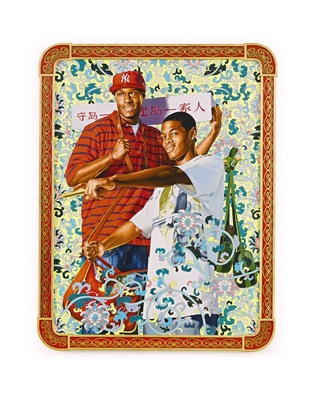
Defend and develop the island together
by Kehinde Wiley (Jerome Zodo Contemporary)
by Patrick Ogle
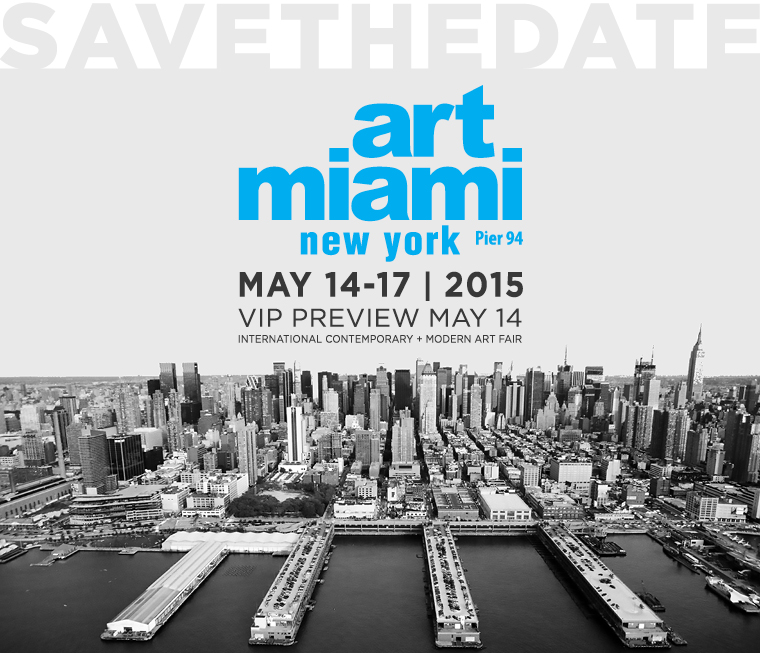
Art Miami , Miami’s premiere international art fair, is set to begin their first New York City fair (May 14 - 17, 2015 at Pier 94 12th Ave. and 55th St.). Given the number of Northeasterners with condos in South Florida a brief visit by Art Miami to Manhattan is only fitting.
There are multiple reasons for this new iteration of the fair and it isn’t to distract from New York’s other May fairs, Frieze and NADA; it is to complement them.
"Many of our collectors and participating galleries from across the country and around the world wanted us to bring a high quality, serious, approachable show to New York during the month of May, which has quickly become an important destination for the acquisition of art during the Frieze and NADA art fairs, and now Art Miami New York, and the major auction houses," says Katelijne De Backer, director of Art Miami New York. “Our goal is to continue to complement the other art events happening in New York City that week. It is a fair unlike any other taking place in New York that week, as it will represent a high quality, wide breadth of the best of what the 20th and 21st century has to offer."
Art Miami, says De Backer, is the only fair during this week to have a strong mix of fresh secondary market works by top artists. These works are integrated with previously unseen works by new and mid-career artists. The idea is, again, to complement existing fairs during the week. Art Miami New York has also included a group of more edgy, contemporary galleries that will set it apart from the Miami version, according to De Backer.
The fair isn’t just the premiere Miami-based fair they are one of the most important international fairs in the USA. They manage several other fairs including: Art Silicon Valley/San Francisco, Art Southampton, Context and Aqua. De Backer was previously the director of the Armory Show and has worked for Scope and numerous galleries of note. She seems an ideal candidate to create an art bridge between South Florida and the Big Apple.
Art Miami , Miami’s premiere international art fair, is set to begin their first New York City fair (May 14 - 17, 2015 at Pier 94 12th Ave. and 55th St.). Given the number of Northeasterners with condos in South Florida a brief visit by Art Miami to Manhattan is only fitting.
There are multiple reasons for this new iteration of the fair and it isn’t to distract from New York’s other May fairs, Frieze and NADA; it is to complement them.
"Many of our collectors and participating galleries from across the country and around the world wanted us to bring a high quality, serious, approachable show to New York during the month of May, which has quickly become an important destination for the acquisition of art during the Frieze and NADA art fairs, and now Art Miami New York, and the major auction houses," says Katelijne De Backer, director of Art Miami New York. “Our goal is to continue to complement the other art events happening in New York City that week. It is a fair unlike any other taking place in New York that week, as it will represent a high quality, wide breadth of the best of what the 20th and 21st century has to offer."
Art Miami, says De Backer, is the only fair during this week to have a strong mix of fresh secondary market works by top artists. These works are integrated with previously unseen works by new and mid-career artists. The idea is, again, to complement existing fairs during the week. Art Miami New York has also included a group of more edgy, contemporary galleries that will set it apart from the Miami version, according to De Backer.
The fair isn’t just the premiere Miami-based fair they are one of the most important international fairs in the USA. They manage several other fairs including: Art Silicon Valley/San Francisco, Art Southampton, Context and Aqua. De Backer was previously the director of the Armory Show and has worked for Scope and numerous galleries of note. She seems an ideal candidate to create an art bridge between South Florida and the Big Apple.
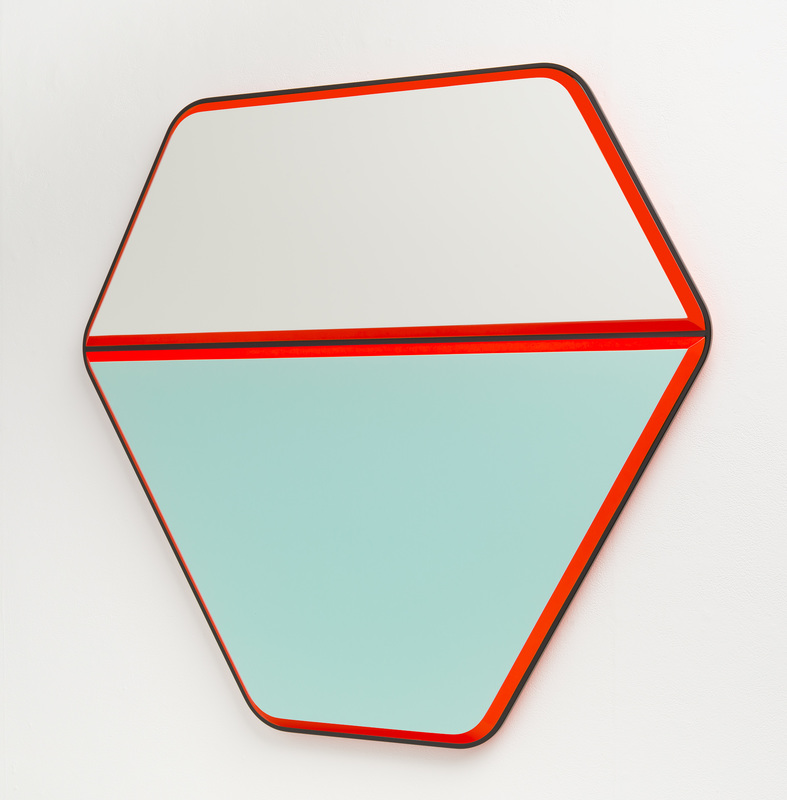
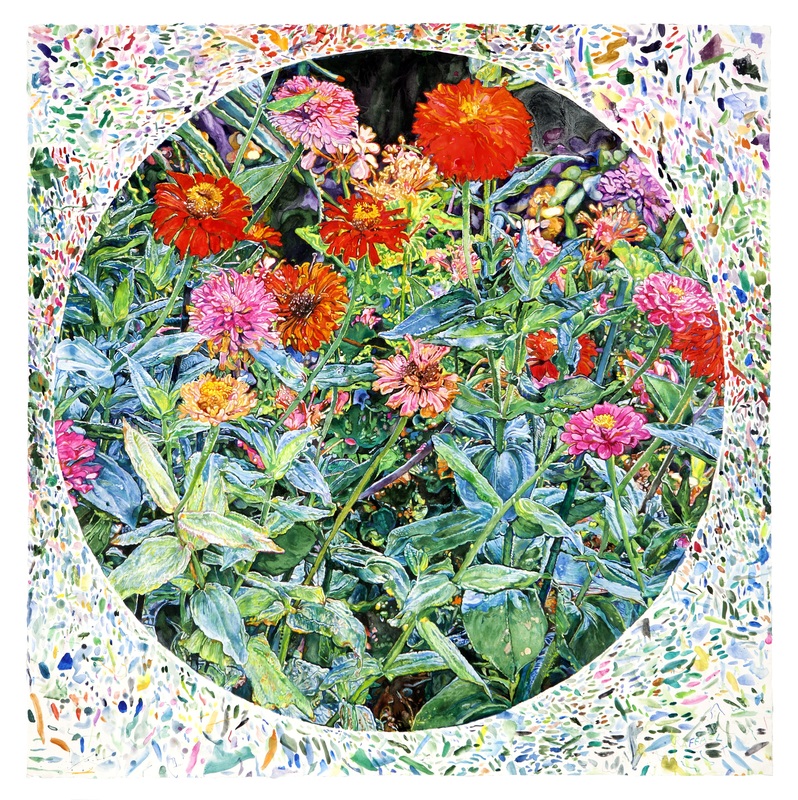
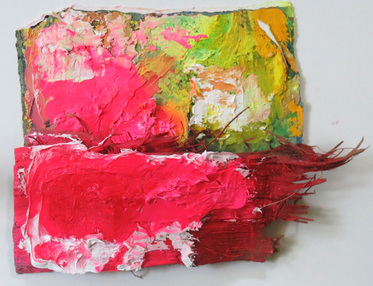
Untitled by Beverly Fishman (David Richard Gallery) & Reunion by Joseph Raffael (Nancy
Hoffman Gallery)
Gallery owners in Miami are enthused about Art Miami’s foray into New York City.
"It is very good to see that an organization displays the banner of Miami with dignity and pride with regard to the arts. We haven’t seen that with other operations; specifically with Art Basel. They have been limited in recognition of galleries in the community. Basel treats Miami like Club Med treats one of those little islands; it is a very different attitude from Art Miami," says Ramón Cernuda, director of Cernuda Arte (Coral Gables). "Art Miami established a brand and are expanding it in the New York Market and this is really positive for Miami as an arts community—and specifically for galleries."
A dozen galleries with locations in Miami will participate in Art Miami New York.
Cernuda says he hopes Art Miami continues with this outreach. He has been satisfied with all the other New York Fairs but likes the notion of the Miami name—and Art Miami’s model—attached to this fair. He notes that Art Miami will not just bring a few Miami galleries with them but a number of galleries featuring, or solely dedicated to, Latin American Art.
"It is very good to see that an organization displays the banner of Miami with dignity and pride with regard to the arts. We haven’t seen that with other operations; specifically with Art Basel. They have been limited in recognition of galleries in the community. Basel treats Miami like Club Med treats one of those little islands; it is a very different attitude from Art Miami," says Ramón Cernuda, director of Cernuda Arte (Coral Gables). "Art Miami established a brand and are expanding it in the New York Market and this is really positive for Miami as an arts community—and specifically for galleries."
A dozen galleries with locations in Miami will participate in Art Miami New York.
Cernuda says he hopes Art Miami continues with this outreach. He has been satisfied with all the other New York Fairs but likes the notion of the Miami name—and Art Miami’s model—attached to this fair. He notes that Art Miami will not just bring a few Miami galleries with them but a number of galleries featuring, or solely dedicated to, Latin American Art.
Cernuda isn’t alone in championing Miami as an art community and Art Miami New York.
"We have a lot of clients from NYC in Miami who come to spend some time away from the cold winter season in Miami and have time to walk around and visit galleries, Museums etc …for this reason the Miami Art scene has grown a lot in the past few years and not only during Art Basel. Almost every day there is an art event, gallery or Museum openings," says Gloria Porcella, director of Galleria Ca’D’Oro (Rome, Miami, New York). "I feel that Art Miami organization is the best and the galleries that participate are very high quality and quality always wins. A lot of collectors who comes for Miami Art Basel prefer to invest buying artworks in Art Miami fair than in the main fair at the Convention center."
Porcella is the fourth generation in her family to work in the art business; they opened in Rome in 1970. In 2010 she opened the gallery’s location in Miami. Gallerie Ca’D’ Oro hosts residencies for young artists in Miami and for young artists all over the world. They now have a space in Chelsea in Manhattan.
She says that Art Miami helps visitors see that Miami isn’t just about beaches and fun; it is also a city of design, art, fashion and Luxury.
"It (Miami) is so important because it is the bridge between United States and Latin America." adds Porcella, echoing Cernuda.
Galleries from outside the area are also taking part and are bullish on Miami as an art destination.
"Many collectors prefer to buy their art at Fairs now where they can see a great deal of work at one time and my experience is that in Miami collectors come from all over the world." says Adah Rose Bitterbaum, director and owner of Adah Rose Gallery (Kensington, Md). "Art Miami New York is another opportunity to exhibit work in front of a large group of art enthusiasts. I love the students, curators, collectors, artists and consultants that visit. I have incredibly stimulating conversations at the Fair and receive a lot of feedback which is so important to me as a gallerist."
Bitterbaum also loves seeing the work brought by other galleries and chatting with gallerists about the art world.
"We have a lot of clients from NYC in Miami who come to spend some time away from the cold winter season in Miami and have time to walk around and visit galleries, Museums etc …for this reason the Miami Art scene has grown a lot in the past few years and not only during Art Basel. Almost every day there is an art event, gallery or Museum openings," says Gloria Porcella, director of Galleria Ca’D’Oro (Rome, Miami, New York). "I feel that Art Miami organization is the best and the galleries that participate are very high quality and quality always wins. A lot of collectors who comes for Miami Art Basel prefer to invest buying artworks in Art Miami fair than in the main fair at the Convention center."
Porcella is the fourth generation in her family to work in the art business; they opened in Rome in 1970. In 2010 she opened the gallery’s location in Miami. Gallerie Ca’D’ Oro hosts residencies for young artists in Miami and for young artists all over the world. They now have a space in Chelsea in Manhattan.
She says that Art Miami helps visitors see that Miami isn’t just about beaches and fun; it is also a city of design, art, fashion and Luxury.
"It (Miami) is so important because it is the bridge between United States and Latin America." adds Porcella, echoing Cernuda.
Galleries from outside the area are also taking part and are bullish on Miami as an art destination.
"Many collectors prefer to buy their art at Fairs now where they can see a great deal of work at one time and my experience is that in Miami collectors come from all over the world." says Adah Rose Bitterbaum, director and owner of Adah Rose Gallery (Kensington, Md). "Art Miami New York is another opportunity to exhibit work in front of a large group of art enthusiasts. I love the students, curators, collectors, artists and consultants that visit. I have incredibly stimulating conversations at the Fair and receive a lot of feedback which is so important to me as a gallerist."
Bitterbaum also loves seeing the work brought by other galleries and chatting with gallerists about the art world.
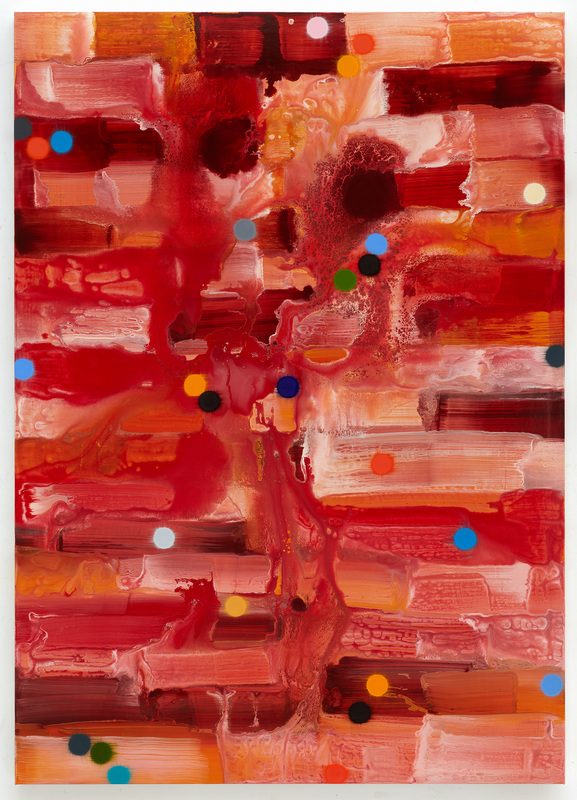
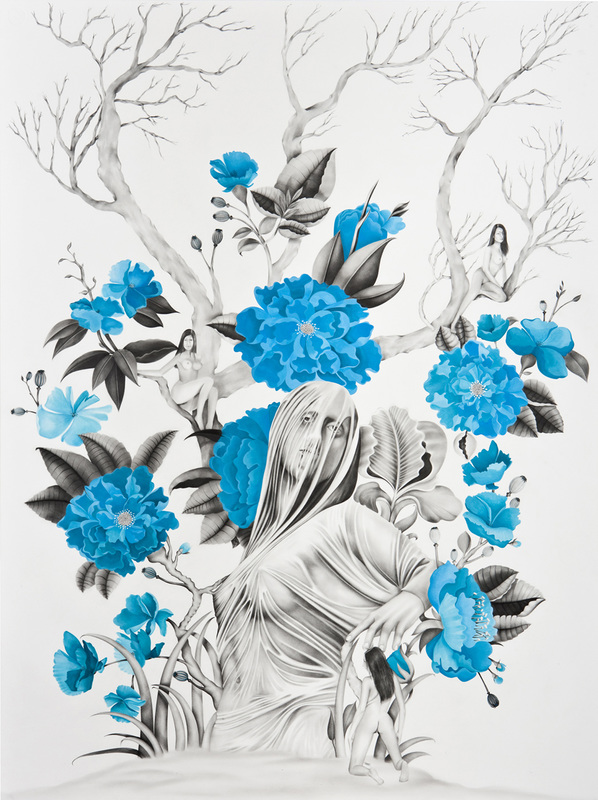
Cygni by Mark Francis (Galerie Forsblom) & Dokhtare Bahar (Girl of Spring) by Taravat Talepasand (Beta Pictoris Gallery/Maus Contemporary)
Many of the galleries at Art Miami itself will be participating in Art Miami New York and is strength of the fair.
"The fact that so many galleries that participate in Art Miami will also be present in New York is a testament to a brand that is trusted and highly effective. We wanted to bring its vitality to New York." says De Backer.
The notion of the “branding” of Miami as an art locale may sound odd but branding need not be some crass thing. Branding a city is about letting visitors—and locals—know all the city has to offer and perhaps what is below the surface. Miami’s brand hitherto has involved bikinis, machine guns and Don Johnson in a speed boat. The rebranding of Miami as an art town (with bikinis and speed boats) is a good thing for the area (the machine guns are best left out). This brand is also seeping out to all of South Florida.
Art Miami, for over two decades, has been striving, and succeeding, at creating this new brand for the city
"It is all about the brand and what Art Miami has done in Miami over the past 25 years. Galleries rely on the rich tradition, the excellent organization, and the quality, and that is what the fair will bring to New York, too," says De Backer. "We have a good number of Miami galleries that will show in New York, national and international galleries, as well as blue chip contemporary galleries. Expanding the Art Miami brand to New York really is an extension of the awareness, importance and continued development of Miami as a year round cultural destination. It also helps promote New York as a regular destination for the arts."
What will make this first Art Miami New York a success?
“The fair will be a success when distinguished collectors, important curators and enthusiastic art lovers show up, discover, acquire art works, and get inspired!” says De Backer.
"The fact that so many galleries that participate in Art Miami will also be present in New York is a testament to a brand that is trusted and highly effective. We wanted to bring its vitality to New York." says De Backer.
The notion of the “branding” of Miami as an art locale may sound odd but branding need not be some crass thing. Branding a city is about letting visitors—and locals—know all the city has to offer and perhaps what is below the surface. Miami’s brand hitherto has involved bikinis, machine guns and Don Johnson in a speed boat. The rebranding of Miami as an art town (with bikinis and speed boats) is a good thing for the area (the machine guns are best left out). This brand is also seeping out to all of South Florida.
Art Miami, for over two decades, has been striving, and succeeding, at creating this new brand for the city
"It is all about the brand and what Art Miami has done in Miami over the past 25 years. Galleries rely on the rich tradition, the excellent organization, and the quality, and that is what the fair will bring to New York, too," says De Backer. "We have a good number of Miami galleries that will show in New York, national and international galleries, as well as blue chip contemporary galleries. Expanding the Art Miami brand to New York really is an extension of the awareness, importance and continued development of Miami as a year round cultural destination. It also helps promote New York as a regular destination for the arts."
What will make this first Art Miami New York a success?
“The fair will be a success when distinguished collectors, important curators and enthusiastic art lovers show up, discover, acquire art works, and get inspired!” says De Backer.
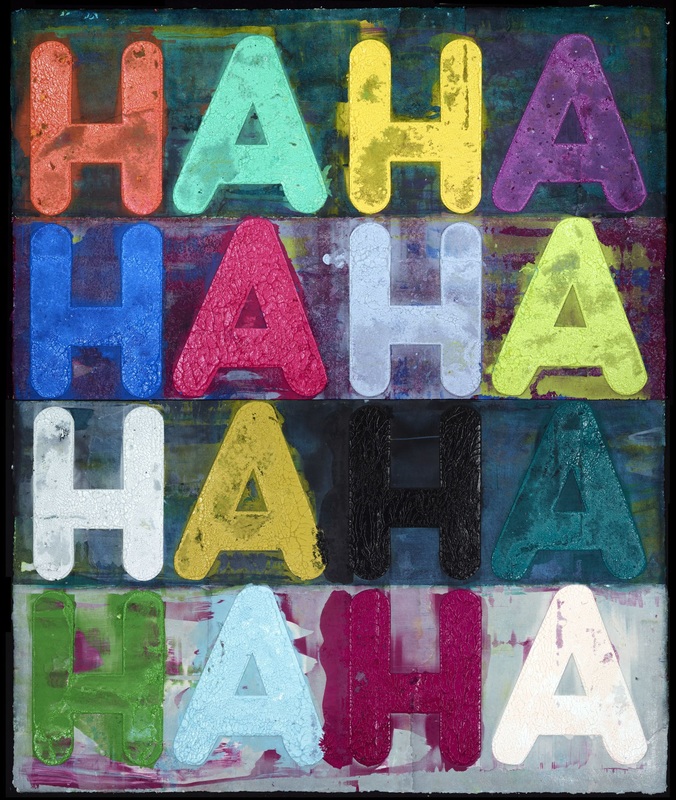
Ha Ha by Mel Bochner (William Shearburn Gallery)







 RSS Feed