Picture
Playing the Part

by Wade Millward

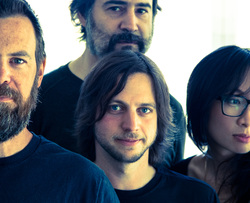
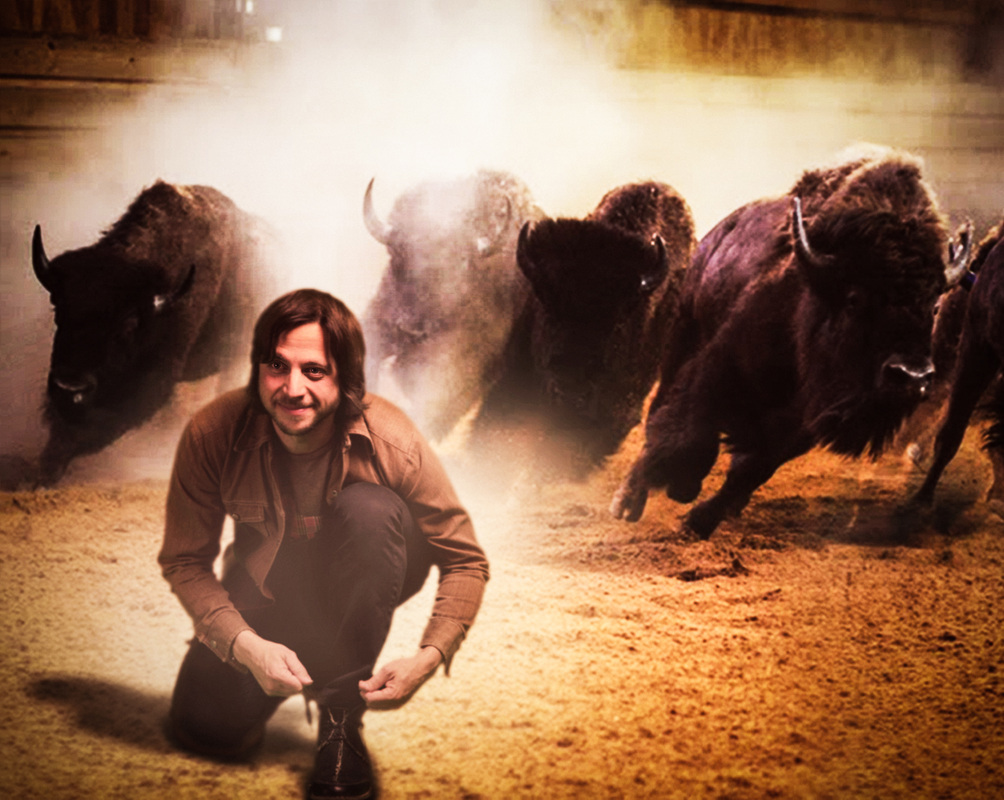
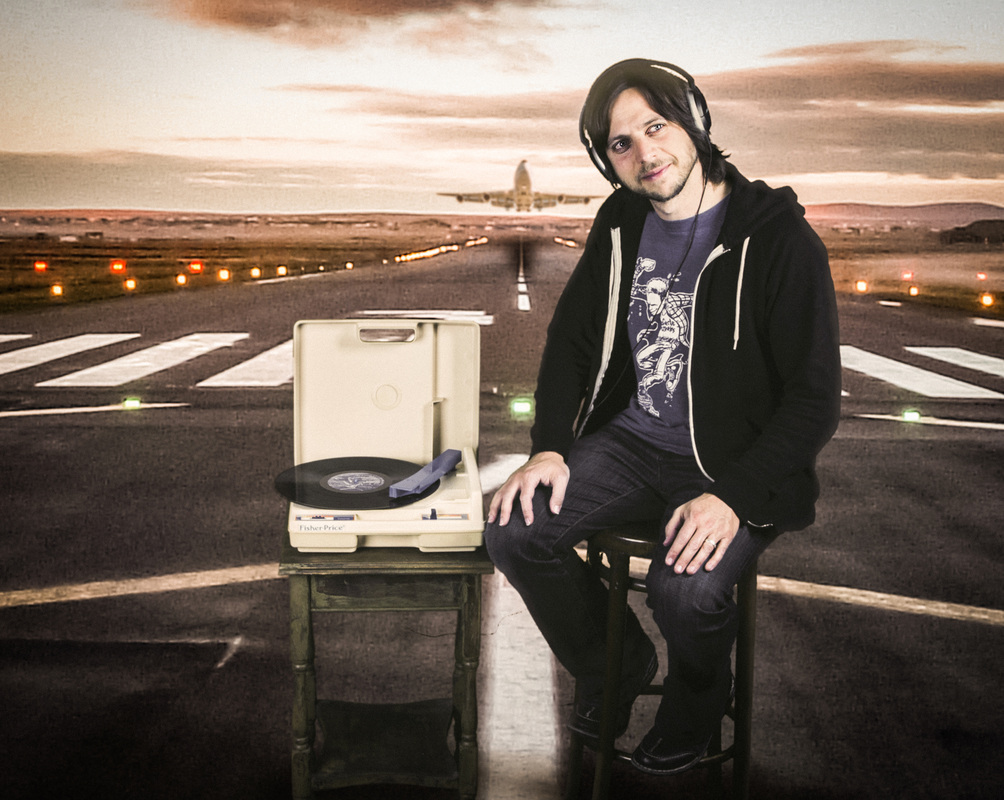
Cape Cod artist Chandler Travis dons many roles in his music career.

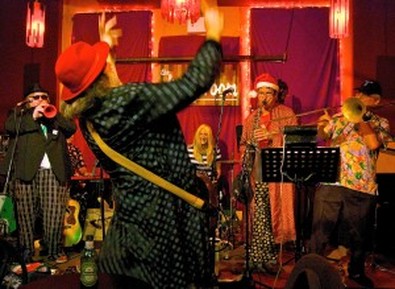
Some nights he’s an in-your-face, pajama-wearing rocker-provocateur.

Some nights he’s an easy, breezy, loungey song man with warm melodies and a casual vibe.

Then there are those other nights, the nights when he’s his booking agent, his publicist, his accountant. He calls it a necessary sacrifice to stay in the music business he’s always loved and to keep the career that’s made him happy.

Travis heads three bands, with occasional reunions for his best-known group, ’80s rock outfit The Incredible Casuals.

The Catbirds are his four-member noisy, bluesy rock band, featuring three other members. Their last album release was “Catbirds Say Yeah!” on June 15.

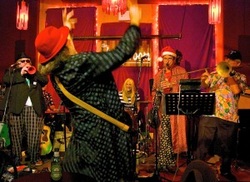
The Chandler Travis Philharmonic features nine (yes, nine) colorful musicians who put on raucous, theatrical rock performances in pajamas, bathrobes and drag.

Travis spun off The Chandler Travis Three-O (four members, of course) when the Philharmonic proved too populous to play Cape Cod’s bars. The Three-O are a different sound: acoustic, slowed down, with clarinets and keyboards helping create light jazz, pop and rock. They released their latest album, “This is What Bears Look Like Underwater,” August 31, just a few months after the Catbirds release.

Travis says his bands’ attempts at trying and incorporating different styles, unusual live behavior and fondness for absurdity and humor has earned them a devoted audience of all ages throughout his 40-year career. He’s even rapped on a few productions, including his 1992 solo debut writer-songsinger (sic) and the song Crab Napkin.

Samples of his style and dates for his upcoming performances are on his website, chandlertravis.com.

Travis’ various personas and projects can cause confusion. Wait, is he the guitarist tonight, or is he the bassist? Should he wear a jacket and tie or jammies and a flower hat?

“Every now and then I bring the right stuff,” he says. “But every now and then I fuck up completely.”

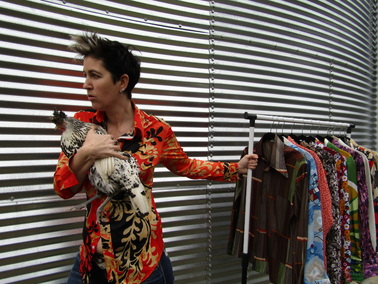
In his off-time, if such a thing exists, he travels, watches movies and cares for the pets with his wife, Marybeth, a commercial artist and professional wild goose chaser (she chases geese off golf courses with one of their dogs, Mag. Travis says the border collie occasionally earns more than he does.)

His personality seems calm, laid back at first. He emailed to postpone our interview on account of Eastham, Mass., getting one of its first nice, warm days that spring. He wanted to enjoy a lunch and walk the beach with some friends, his horses Patsy and Trip and his dogs Bodie and Mag.

But Travis is quick to self-deprecation and sarcasm and describes himself as the unchallenged leader of the two bands bearing his name. The Catbirds and the Casuals, on the other hand, are democratic projects. Travis likes a sense of definitive direction with his projects, but learned to avoid doing music alone after a solo career.

“I get sick of myself,” he says. “I like to bounce stuff off of other people.”


He started professionally in the late ’60s, early ’70s, a time he calls a boom for the music industry, back when musicians had better odds of their craft translating into cash. He wonders if he would’ve kept his passion for music had someone told him he’d someday be his own booking agent and accountant, and he never would’ve guessed record stores would start going out of business. They were home to goods Travis considered part of his identity. It was records that led to his affinity for music.

When he was young, back when he went by his first name Peter, he heard the musicals and Cole Porter records his parents brought home. His listening habits were typical for a ’60s kid: Bob Dylan, The Kinks, and The Beatles. Today, he says he’s into Brazilian, African and ska music, and enjoys artists from Duke Ellington to Randy Newman to XTC.

Travis came to Boston for college, ready to protest and get involved in the country’s changing social climate. He started going by his middle name, Chandler (his mother’s maiden name) and realized music was his life’s calling.

He formed his first major act, a comedy folk duo called Travis, Shook and Club Wow, with Boston University buddy Steve Shook, who also attended the same Connecticut prep school as Travis. They toured in the 1970s, mostly supporting comedian George Carlin. They performed on TV for The Tonight Show and The Midnight Special.

Club Wow grew into the Casuals in 1980, adding drummer Rikki Bates and guitarist Johnny Spampinato. Eventually, the group drifted. Shook left for a solo career, had kids and became a builder. The other Casuals concentrate on their own projects, making time for the occasional reunion, such as July 7’s show at the Beachcomber bar and restaurant in Wellfleet, Mass.

Bates, who Travis says is 6’4” and plays in drag, is The Catbirds and Philharmonic drummer. The two bonded through a mutual appreciation for the rock group NRBQ. Travis was hooked on how such musical virtuosos could still pull off silly stage antics with reckless abandon. He calls NRBQ pianist Terry Adams one of his favorite musicians.

Regretting the lack of attention Shook’s guitar talents receive today, Travis says the one thing he’d redo is be more serious and get bigger during his first go at music.

“In 10 years we put out one album, which shows we had fun in other areas,” Travis says. “But Steve is amazing, and I wish more people knew about him.”

Travis downplays his own instrumental skills, saying he’s a singer and a writer first. He’s prolific; with nearly 700 songs listed in his website’s song index and formerly a columnist for The Cape Codder newspaper under the name Thurston Kelp (the column was titled “Kelp on Kape.”)

He describes himself as a ham, a natural onstage who knows how to command others and the audience’s attention.

“You give me a hole, I’ll fill it,” he says.

With nearly 40 years’ experience under his belt, Travis, who turned 63 on March 15, is still kicking around a few ideas. He wants to do a live album for the Philharmonic and a retrospective for all four of his bands, which he says have produced around 40 albums. Some new songs he’s kicking around include the African-flavored Strongman in North America and a lullaby for insomniacs titled Shut Up, Shut Up, Shut Up.

Travis tries to keep his groups self-sustaining, doing or enlisting friendly help in accounting, booking and promoting. He says he could use help with the business end of his projects, such as a proper manager. He estimates 5 percent of his time is spent actually playing, but he’s just as fascinated with music as when he started. He never wanted to be an aimless college graduate who fell into a job he didn’t love.

“I don’t know how those people live,” he says. “I’m so glad to be obsessed with something.”

For Travis, the joy is in the creating, the collaborating to design a song’s blueprint before executing it for an audience. His solo work lacked the joy he got in communal accomplishment.

He plays mostly near his home in Cape Cod, where he says his living’s made from Memorial Day to Labor Day, sometimes playing six nights a week. He says springing the Philharmonic and Three-o on new listeners usually gets a good reaction.

His usual venues are bars and restaurants, where he says chairs and tables stifle his theatrical urges (hence the smaller Three-O and Catbirds). Those patrons are less likely to want a show and even get shocked when bands engage them.

To Travis, any strong reaction is a good reaction. Bad days are when his bands can’t provoke, can’t connect at all with a crowd.

“I’d rather be booed than ignored,” he says. “As long as they’re thoroughly jostled, I’m happy.”

His tours have taken him far and wide. Highlights include playing New Orleans with the Philharmonic and bringing the Casuals to Japan, where the crowd’s familiarity with his songs surprised Travis.

He’s played his share of unusual venues. He drove to one of his earliest gigs at a Worcester YMCA from Boston in a pickup truck. Years ago, he plugged into a drive-in, where his music was played through audience’s car speakers out of sync with the performance. The Philharmonic hosted the release party for their 2000 debut, Let’s Have a Pancake, at an actual pancake house at 11 a.m. It was one of their best shows, Travis says.

What keeps him going is fighting against the swarms of shitty music out there, and he’s driven to get the tunes out his head and into his listeners’ ears. He’ll keep experimenting, diversifying, and surprising his audiences and himself.

Going at music a different way, Travis’ way, has been the method since the beginning. Club Wow was only able to put out a best-of album. The first Casuals record was a mock surf album. Throughout this summer, he’ll rock and shock listeners as leader of the Catbirds and the Philharmonic, or he’ll ease them as a Three-O. It depends on what night they catch him.

“One of the drawbacks of being obscure is we don’t have anything to depart from,” Travis says. “We started with a departure, and it’s been a series of departures.”


Picture
Here Come The Mummies are a band out of...I guess Egypt. Although, there are mummies in Chile and other South American areas. I mean they COULD be Incan mummies I suppose. Well, anyway, they are a band who, at the very least, look like mummies and we interviewed a member of the group (Java Mummy) about the music and issues related to being dead. They are also poised to resume touring in a couple of weeks (link to dates below).


How can you play instruments after your brains have been scrambled and removed through your nose?

Easy. Once the brains have been scrambled and removed through the nose... the nose... it becomes easier than ever… ever to play an instrument… instrument. Snark. Whee-bop! At this point (wha-heem!) the student is able to express himself… himself… without over-analyzing his... activity… Snark. Whee-bop. Wha-heem!

In every movie I have ever seen with mummies they have been REALLY pissed off and killing everyone. Why is that?

 Bad catering.

How was it a bunch of dead guys got into rock n roll? Were you waiting around for 4950 years JUST for Les Paul to invent the electric guitar?


 That, and the Wonderbra.

Are you all REALLY hungry like the Mummy in that Anne Rice book? And that guy was bangin' everyone in SIGHT too if I recall (I usually try not to recall Anne Rice books).

We too possess an extravagantly enhanced libido, just as Rice's mummy does. We need neither sleep nor food to sustain us, same as Rice's. We differ in what we do constantly crave, that being a steady stream of Anne Rice novels for our general consumption. New, used, partial, dust jackets or without, hardback, doesn't matter. They are delicious when lightly toasted, stuffed with almonds and goat cheese, and paired with a nice pinot gris. We have several suppliers.


HERE COME THE MUMMIES TOUR DATES CAN BE FOUND HERE

Picture
Java Mummy
What sort of modern human music fan is going to want to hear Here Come The Mummies?

We appeal to all types of people. All types of people who feel the beat in their pants. While this may appear to be a cutesy-type, evasive, and all too general answer, we give you our ass-urance it is absolutely bona-fide.

Who are the modern musicians who inspired you to creep from the sarcophagus to jam? Likewise what inspired the upcoming LP, Cryptic? Where is it coming from musically?

Franz Shubert, Shooby Taylor, Taylor Swift, James Taylor, James Brown, Rick James, Dick Van Dyke, Van Dyke Parks, amongst many others whose names we are hard pressed to play stupid word games with off the tops of our heads. As to inspiration, we're gonna go with _______. You know what it is. You KNOW. We know you know. Don't over-think this… Whew, 'bout damn time! We knew you'd get it, though, good job, y'all.

Tell the modern human mortals what they can expect at a Here Come The Mummies show?

A super-tight, fiercely original, eight-piece band which tosses off libidinous lyrics, infectious musical confections, and which features a 5,000 year-old Egyptian mummy donning a gorilla suit to play the bongos. It'll leave your senses reeling, and burn down your inhibitions like an insurance job on an old hotel.


Picture
photo by Sue Fielding
Everyone who gets into the blues has someone who got them into the blues. It never just seems to happen, there is always a blues loving sibling, father, mother or guy you met at the gas station who sat there all day with his Kay guitar.

For English musician, and blues enthusiast, Bex Marshall, it was her uncles.

“I had uncles on both sides of my family who inspired me ... One was a live rock n roll singer in the 60 s who had a huge voice and stage presence the other a very knowledgeable blues music fan who had an incredible collection of records which I used to sneakily play while he was at snooker ! Also my guitar tutor who taught me to pick ragtime blues inspired me to that roots playing.” says Marshall.

Marshall's latest record, House of Mercy, is out now.

Marshall learned as much about the basics of guitar playing as she could and says she spent her teen years listening to music ranging from ACDC to John Lee Hooker. Then she started writing on her own and, more important, traveling.

“That kind of thing grounds you and the blues music that has always been the root of what I have been into the acoustic pickin' style always challenged me so I started developing a style of playing which incorporated it all,” she says. “Then I bought my OZARK resonator ... Of which I have several now including a one off to my very own spec s.”

Marshall says she plays the blues when she is up, when she is down—and it might even be the same song.

“Blues must come from whatever provokes you emotionally. The serious tunes can make you smile too. It's the music you should feel most at ease with like an old buddy,” says Marshall. “It is the building block of all music and most respected, it’s for me it’s the most exciting genre. When you hear the first few bars of a good blues tune it gets my haunches up!”

But how does a new artist fit themselves into the rarefied world of blues. How do you fit into the time-honored and sometimes even calcified genre?

“By sticking to the basic rule of good blues--the songs, the songs have to be good. Lyrics are so important to me; I love play on words, and blues can be very repetitive, so if you gonna sing one line many times it better be a good line!” she says. “I love writing stories and the blues genre is all about stories, usually troubles that begin between a man and a woman ha, but I want to explore the music and try to push boundaries while still keeping it real, there are so many incredible influences in blues music, roots to hardcore electric blues, the main thing is arching your back and putting your heart and soul into it!”

Then there is the whole blues MAN aspect.

“It’s always tough when you try to break into a male dominated world, so you have to be made of strong stuff.  I grew up with lots of men around me in my family, so I was toughened up early. I prefer the company of men to be honest, so I am comfortable in the blues environment.  I have always had a need to strive to be as good if not better than them at what I do,” she says.
“I just want to add a slightly different dimension to the whole thing, to be original and the mission is to get under the skin of the hardcore purists and get them secretly listening. I want to take the pure and make it interesting in my own way, with as much real blues quality as I can.”

How does Marshall view playing in the USA—artists coming here to play smaller venues are often not treated as well as in Europe (by venues).

“Although I will say the USA is the home of the blues and the people know it-- The audiences rock! There is a respect for musicians here which is unrivalled anywhere else in the world I think,” says Marshall. “It is a joy to play here. Whether it’s a big club or a mom n pop bar, I feel much more relaxed playing here(the U.K.),I think, like coming home.”


Her new record House of Mercy has an interesting genesis.

“Barry my husband who booked a club called The Borderline in Soho for 6 years, wanted to buy it and after researching the location, found that St Barnabas Church ( next to The Borderline) had in the 18 & 1900's been a prostitutes refuge called the House of Mercy, he wanted to use that name for the restaurant venue above the Borderline which he wanted to transform into a weekly residency show bar for top class artists he eventually lost out in a bidding war to corporations and eventually left the club, but kept the name for our company that now that includes a weekly syndicated radio show which is produced from the Snake Pit Studios which we built in the back garden. “ she says. “It also incorporates our record company through which the record has been released. The radio show has two 'as live' radio sessions a week, taken from the wide vista of Americana, so we are always full of musicians and their music, jams happen all the time and that's where I got the House of Mercy song from and now the title of the record, it's a song that encapsulates all of my styles that eventually appear on the record. We also subsequently put up the odd band and traveling minstrels so in effect we are a refuge for musical prostitutes.”

This record was also self-produced with assistance from the engineer from previous outings.

“I wanted to have a go a producing this record myself this time around, I had learnt a lot from my first two records Bootlace and Kitchen Table and took it on this time, I have an incredible engineer who I work with called Nick Hunt and he is so fantastic to work with, he made it very easy for me, considering I’m " THE ARTIST " I was very aware about not being too precious and over indulgent about things and having a definitive goal for the record to sound like,” says Marshall. “Although I did have a certain amount of freedom in the studio, which was a luxury, I recorded the bands rhythm tracks in the same small studio I used for Kitchen Table which is about a mile from my house in Muswell Hill called Boogieback Studios, sticky carpets and amps in the bathroom etc, and a great vibe, a lot of the overdubs with the Reno Brothers, Brigette De Meyer, Eileen Healy and BJ Cole were done there.”

The mastering was done at Snakepit Studio and at The House of Mercy. She would mix with Hunt and then spend time listening to the recordings in her car (always a great way to really hear music how people listen to it—at least in the old days).

Marshall also worked as a dealer. No, not meth or smack, but in the gambling, card-tossing way. One thing that has always eluded me is shuffling cards.  So I asked if she could teach me.

“Yes there is a cool shuffle I could teach you; split the pack and hold the two packs facing outwards in both hands and squeeze gently at the top and bottom of the cards so they bend slightly in the middle towards your palms then squeeze hard so that the fly out of your hand and fly across the room ..... It’s called a 52 card pick up shuffle...heeee. My advice? Don't play cards.

Sound advice.

Marshall recently finished a tour of the USA. Be sure to keep an eye open for Marshall in tour during 2013 in the USA and Europe. This most recent tour was solo but the next will be with a band. She also hopes to hit Australia down the road.

Go for the blues, not the card tips!

Bex Marshall's Ozark Resonators


Picture
by Patrick Ogle

The Mynabirds
new record, Generals, is an amalgam of styles. Like
most good bands these days they are difficult to pigeonhole. Their music moves from the electro-poppy Disarm to the anthemic soul-rock of the title track with  ease.  

“I might call it ‘garage soul’ just because it is really rooted in soul but it is kind of all over the place,” says Laura Burhenn. “I think my music is forever rooted in soul music, the song that tells and emotional story. Nina Simone, Aretha
Franklin
, singers who give the highest and lowest of the human  experience.”

But it isn’t all singing about feelings. There is a political angle to the music as well.

 “I have always written songs with a political  bent. In high school I rewrote Amazing Grace to rail against politics,“ she  says. It is hard having a political voice that goes deep. I had a decade of frustration living in D.C.  between 97 and 2003. I was present for protests leading up to Iraq
War.”

How people’s memories seem to vanish perplexes Burhenn. How things that happened just a few years before leave the collective consciousness so easily. She talks about how people, a few years after the election of 2000 had forgotten that Al Gore actually won (at least as far as the popular vote goes). 

“You stand up and say ‘I’ll never become like that;’ then you  realize you have become that way,” she says. “It was very frustrating personally. I wanted to take the frustration and turn it into something positive. In the end I wanted to focus on things that unite us rather than divide us. Love/Vamp songs are a way to do this.”

Burhenn isn’t naming names, placing blame  or taking sides in the partisan political nonsense of the day. The music and its message are not about that.

“I didn’t want to name names; this is about the eternal struggle, small men and women against those in power. I don’t know anybody who has the answers.” says Burhenn.

She admits she certainly doesn’t. In fact she felt there was something missing from the album as she was writing it.

“What can you do in the face of war and discord? I felt I was missing a song.” says Burhenn.

She also thought, who am I? How do you write songs about personalizing the world’s problems? Then she had a crazy dream; she relates the short version.  At one point in the dream she turns around and there was a chorus, all races, all ages, holding different color balloons.

 “The realization was; ‘oh, right, love. Be kind to the people around you'. That is the line, ‘I’d give it all for a legacy of love’.” says Burhenn.

The first song on the album, Karma Debt, includes the line, as does the final track. If there is a single, overarching theme to that line encapsulates it.

The Mynabirds just finished up most of second part of their recent  tour. There are a few dates here and there and you can keep up to speed on  happenings in their world at the band website, themynabirds.com.
Buy Generals directly from the label HERE.
The Mynabirds have been touring a great deal lately but the recent outings have not been the longest Burhenn has been on.

“Last year I toured as part of Bright Eyes, that was the most extensive touring I have one. It was a full year. As for The Mynabirds it doesn’t seem like as much as the first record.” she says.

On tour you always learn some life lesson. Burhenn learned a valuable one the last time out; watch out when you play in Chicago or someone might steal your fox head. On stage Burhenn wears a fox headdress made by artist, Erin Shaw (she is quick to point out it is fake and no foxes were beheaded or otherwise harmed)

“I wear the headdress and it never crossed my mind someone would try to steal it.” says Burhenn. 

But someone did.  Burhenn says she had a few whiskeys in  her when someone yelled “He stole your fox!”  Members of the band chased him down. And the cops arrived.

“I just wanted my fox headdress back. I didn’t want him arrested. I probably sound like an old person. He was drunk. He thought he was being real funny.” she says.

It was probably less funny in the back of the Chicago police car. Nothing sobers you up like a trip to the land of the stainless steel toilets. 
A drunk snatching your belongings off stage is not the only  downside to
being a musician.

“You make these records, write these songs near and dear to your heart but the industry is in a state of flux. “she says. 

She mentions a statistic she heard that only 1 percent of records sell more than 10,000 copies. At a fairly generous royalty rate that translates into “you need a
day job.”

 What about making money selling your songs to advertising? Artists can do that
right?

“I come from the school—music shouldn’t be made to sell products
but we are in an era where it happens. I have turned down some licensing, a
sunshiny grocery store ad,” she says

They wanted to use the song, Cape Parade, which was about a friend of hers that died. And you just don’t sell a song like that to sell chips and dip.  Burhenn quotes the title track from Generals that ends with the line; “I haven’t made a dollar yet.”

Burhenn says that is the plight of musicians these days. Someone is a musician because it is in their soul, is going to do it  anyway. That is a true artist.  The whole system takes advantage of that.

 She laughingly talks about an  imaginary room full of capitalists telling each other “they will do it for nothing!” Burhenn doesn’t REALLY think this literally happens of course.

“We are in a singles era; everyone wants to listen for 2 minutes. That’s why I made a concept record. “ she says.
Burhenn says she feels bad sounding negative on the music business. It isn't all about doom and gloom for her.

“I know the point was focusing on the positive, every time we go out we have so much fun. We played Phoenix, Arizona. It was their first time there and the place was packed. It was wonderful, people coming up and saying ‘I love this record, it is how I feel.’ It gives me hope.” says Burhenn.

The band played Houston recently and a couple of underage fans travelled an hour and a half and couldn’t get in. They begged the venue to let the kids in. And they did. It is a big problem for bands not playing arenas. Bars often don't let fans under 21 in. And you cannot always play festivals.

The Mynabirds also recently played Pickathon in Portland.

“That is the best festival in the world. Pickathon is special. I love that they keep it small, ecologically sound.” she says.

Burhenn also loves the musical diversity. While there are some well-known acts at the festival that isn’t the focus.

“They are clearly not trying to get bands that draw the most people. They have incredible people I’ve never heard of.”  says Burhenn.

And there are doubtless music fans who have yet to hear about The
Mynabirds but that should be short term. There is no chance this music will go
unnoticed.


Picture
by Wade Millward

The Cringe is readjusting to domestic life after coming off a brief Midwest tour and awaiting the release of a fall album.

Vocalist, keyboardist and rhythm guitarist John Cusimano says the tour successfully showcased the band’s brand of what he calls “macho-rock,” high-energy instrument machismo derived from Foo Fighters, Pearl Jam and, Cusimano’s favorite, The Who.

Quick to reference a piece of wisdom from his rock idols John Lennon and Paul McCartney, Cusimano is the showman of the group.

Embodying the Cringe’s brand of what he calls “macho-rock,” Cusimano, 45, is unafraid to work the stage and surf the crowd.

While the other Cringe guitarists — lead James “Roto” Rotondi, and bassist Jonny Blaze — are more protective of their equipment, the singer knows smashing a guitar or one of drummer Shawn Pelton’s sets is a sure-fire closer. He’s put five on the stairway to heaven.

Calling from his home in upstate New York, about 200 miles north of the Big Apple, he’s enjoying a few weeks off from the band following a brief tour with L.A. alt-metalheads Trapt, best known for their platinum 2002 single Headstrong.

Cusimano says the six-gig tour of the Midwest was a success. The tour culminated with a chaotic Aug. 9 finale at Peabody’s Concert Club in Cleveland.

After a daytime tour of the Rock n Roll Hall of Fame, where the Cringe members admired the mellotron used for The BeatlesStrawberry Fields Forever, they played a show that Cusimano says took him back to 1994 — thanks to a catfight, raging mosh pit and ill-fated guitar toss worthy of Nirvana’s Krist Novoselic that smashed Cusimano in the forehead.

The fight, as Cusimano recalls it, started after one woman near the stage cut in front of another. Hands pulled hair, one woman slammed the other with a wedge monitor and the singer played peacekeeper.

After Cusimano calmed the women and returned to his mic, the fight raged again until security separated the women.

“It was out of control,” he says. “It was kind of frightening actually, but I don’t think anyone got permanently injured.”


He says this was the Cringe’s longest tour with consistent venues, estimating the band played to crowds of several hundred.

Cusimano calls the tour a success despite traveling difficulties and flight delays. He says one attempt with the low-cost carrier Spirit Airlines ended with the band trying to, within an hour, reclaim its luggage from baggage claim, cancel the flight and book a new one.

Though tired by the tour, as with all the group’s tours, Cusimano says his genuine friendship with his bandmates keeps him going.

“It’s a drag to be driving five to six hours a day to whatever the next day,” he says. “But if you do it with your brothers, it keeps it fresh, it keeps it interesting. We treat it like a little vacation, like summer camp for the Cringe.”

Cusimano, drummer Pelton and bassist Blaze all live within three blocks of each other. The band rehearses a couple times a week, and Cusimano and guitarist Rotondi write songs together.

The two writers are part of a songwriting group headed by Austin, Texas, musician and artist Bob Schneider. The 20 group members write songs from phrases picked by Schneider. Cusimano says 80 percent of the Cringe’s upcoming album, Hiding in Plain Sight, came from the writing exercises.

The album, out Oct. 9, comes two years after The Cringe’s last release, Play Thing.

Cusimano says the album deals with distancing oneself from “frenetic” contemporary life. The Catholic-raised singer acknowledges the influence of the Buddhist philosophy followed by Rotondi.

The band will tour to support the album, with dates coming soon, and is now writing the follow-up. For the album, Cusimano says to expect the loud, hooky, face-melting rock the Cringe are known for.

“I’m obsessed with chasing this elusive hook,” he says. “If you can have that all-elusive hook that people like that surprises you in a way … that in a big rock package is what the Cringe try to do.”

In his off time, he rides motorcycles, snowboards and spends time with his red-nosed pitbull, Isaboo, and wife, celebrity chef Rachael Ray, whom Cusimano calls the band’s biggest fan.

He says she attends every gig near their New York state home and keeps the Cringe members well fed. As Cusimano says, “the best way to a band is through is their stomachs.”

He says his favorite dish of Ray’s is the spaghetti carbonara she makes for him on his birthday, a tradition since the first they celebrated as a couple. After a late-night gig, the singer opted out of the fancy chateaubriand steak Ray offered in favor of pasta with bacon and eggs, a classic dish for Italian coalminers returning home from work.

Cusimano, whose grandfather was from Palermo and grandmothers from Catalano and Naples, and Ray, half Sicilian, take pride in their Italian roots. They married in Tuscany, home of one of their favorite red wines, Brunello, and visit every year.

“We are a very emotional couple — in good way,” he says. “We’re always happy and always full of good food.”

As he awaits the Cringe’s next album release and his and Ray’s seventh anniversary on Sept. 24, Cusimano says he has nothing to complain about.

 “Life is good,” he says. “We work really hard, try to play hard when we can, take care of our families. You’ve just got to try and not take yourself too seriously.”


Picture
By Wade Millward

Sola Rosa is back home in New Zealand and playing Oceania after a brief tour of the West Coast.

The electronica act’s North American summer tour started July 12 in Victoria, Canada, and ended July 22 with at the Levitt Pavilion in Pasadena, Calif. The tour supported the act’s album of remixed songs from the group’s Get It Together LP, which was released in the U.S. last year.

Sola Rosa, which blends jazz, hip hop and Latin, was founded by Andrew Spraggon, who handles keys and percussion.

Speaking by phone from his tour bus traveling to Pasadena, Calif., for the group’s last gig of the tour, Spraggon’s tired voice betrays his three hours’ sleep and general fatigue after a six-week tour of Europe and two weeks in North America.

By his side is Spikey T, a Sola Rosa vocalist and soul performer in his own right who’s featured on three Rosa albums and is a staple of the group’s tours.

Spraggon, 41, says the shows have had their highs and lows. The band played to a few hundred listeners in San Francisco the night before and sold out one show. The smallest crowd was about 15.

His second tour of the U.S. with Solar Rosa, Spraggon says he sees the difference between New Zealand and the States, from their venues to the food offered at gas stations.

He says compared to the quieter, more reserved crowds of old English nations such as New Zealand and Canada, Americans are louder, which he likes. Though he describes his music as “more lounge-y,” that doesn’t mean his shows are the stuff of smarmy cocktail bar singers.

“We’re not polite live,” Spraggon says. “We try to bring a party if we can.”


On the group’s latest album, Low and Behold, High and Beyond, released online Aug. 10, Spraggon says the band’s sound has more of a hip hop feel with less reggae.

The musical change comes because Spraggon hasn’t been able to follow the Jamaican music scene and keep up with the latest trends in the genre.

He says the album was influenced by the work of The Roots’ How I Got Over and rapper Q-Tip.

Throughout August and September, Sola Rosa will tour New Zealand then head to Australia. Tour dates can be found on the band’s website, solarosa.com.


Picture
by Wade Millward

The Wave Pictures may be an indie band, but they’re not an indie band.

That’s what Franic Rzycki wants critics and listeners of his Wymeswold, England, pop rock trio to understand. He says the band, now touring the U.S., is more influenced by the classic rock ‘n’ roll of Chuck Berry, The Rolling Stones and early Fleetwood Mac than any safe, modern rock band.

What’s more, the bassist boasts about the group’s instrumental prowess. Knowing how to play your instrument is distinctly non-indie, Rzycki says. Rzycki is disappointed by the snobby hipsters his band attracts, especially in the U.K. He rejects bands such as alt-rockers Coldplay, who are “pissing away time and money for something mediocre.”

“That music doesn’t interest me at all,” he says.

Instead, Rzycki and his bandmates — drummer Jonny Helm and singer-guitarist Dave Tattersall, Rzycki’s friend of more than 20 years — prefer to entertain crowds with a musicianship overlooked from the group’s prolific collection of albums. The Wave Pictures’ twelfth album, Long Black Cars, was released April 17.

Rzycki says he and Tattersall are known as the group’s curmudgeons by drummer Helm. Though Rzycki considers Helm’s rationality grounding for the band, he finds his and Tattersall’s complaining justified and an important perspective for living. 

“If you don’t dislike something, how can you fall in love with something else,” he reasons.

He speaks from Austin, Texas, while his mates enjoy an outdoor pool fueled by the Barton Springs. The band is taking a break from its April-May tour with pop quartet Allo Darlin’. Rzycki says attendance for the tour has been on and off. The bands sold out a show at New York’s Mercury Lounge while a gig at the Spanish Moon in Baton Rouge, La., only attracted about 10 people.

Crowd enthusiasm is key for a Wave Pictures show, as the band doesn’t use setlists. Frontman Tattersall picks songs based on how he feels in the moment.

“I think it’s important that when you go to a live show,” Rzycki says, “you see something that’s different.”

Despite the band’s mixed reception, the 29-year-old says the Americans he’s met are “very polite.” He considers this tour much more successful than the band’s previous one in North America, which Rzycki called “disheartening” for its poor organization and poor promotion.

“We got the worst impression of America,” he says. “This tour is really changing that.”


Rzycki says the best audiences are in Spain, where crowds go wild with partying and drinking. The craziest fan encounter he’s had while touring was with a Spanish girl who offered to sodomize him.

“She was kind of shy about it,” he says. “You don’t get offered to get sodomized every day.”

In the band’s native U.K., audiences are colder. Rzycki says this is because the band attracts a crowd of indie snobs turned off by the band’s non-indie appearance and most certainly non-indie guitar solos.

Rzycki expresses disappointment at how the band’s rocker side is ignored by critics and reviews. He says the problem with indie crowds is they frown on instrumental ability, such as his beloved soloing. He names New York act The Wows, French act Coming Soon and Stanley Brinks as artists whose live shows actually impress him.

The Wave Pictures have existed for 14 years, but Rzycki met singer Tattersall when they were 4. They’ve played guitars, moved to and from London and got a record deal together.

The difference now that the band is a career is worrying about making money and compromising with necessary evils instead of playing purely for pleasure.

“It’s not 100 percent fun anymore,” he says. “But it’s still a fantastic job.”

The evils the Pictures deal with concern their needed Internet presence. The amount of time Rzycki must spend on online promotion frustrates the bassist, particularly the emphasis on social networking and making music videos. He runs the band’s website while a friend maintains its Facebook page.

The process of making videos is a “pain in the ass” to Rzycki for its slowness. This contrasts with the band’s work in the studio, where, to capture true rock ‘n’ roll spirit, it records and produces music as quickly as possible.

“It’s hard to understand how some bands are very slow, unproductive,” Rzycki says.

Yet he recognizes that the band’s most popular songs are from videos and special online releases.

“We’d be screwed without it,” he says.

Even as career musicians, Rzycki and Tattersall make sure they get in a game of pool at every town and in every venue they play. Rzycki, addicted to the game since both men got cheap, foldout pool tables as boys, says they can play for 3 hours straight and into the wee hours of the morning.

After the spring tour, the Pictures will play festivals, including NYC Pop Festival and Green Man Festival in Powys, U.K. Rzycki doesn’t look forward to this leg of the tour.  He much prefers local venues and smaller festivals — such as End of the Road in North Dorset, U.K., and Indietracks in Derbyshire, U.K. — to “unenjoyable,” “depressing” big-name festivals, where the sound quality is poor and the stage separates and disconnects the band from its audience.

And despite the “indie” mislabel, Rzycki likes the positive traits that come with the scene. He says nothing’s more punk than people becoming artists through home recordings.

Not that the Pictures stay at home or are glued to their computers. In addition to the ongoing tour, Tattersall has a solo album coming out, and he and Rzycki will put out an album as the Lobster Boat Band, a rock ‘n’ roll act featuring Coming Soon.

While the best punks can be the most crotchety, Rzycki shares some satisfaction hiding behind his cynical demeanor.

“Even if I complain about a lot of stuff, the truth is I’m living a great life at the moment.”

The latest from The Wave Pictures...

And for some perspective..an older video...


Picture
By Wade Millward

Steve Barton fondly remembers his dad as an upbeat clown. Barton’s dad would blow kisses at people when he walked into a room. To him, things weren’t just good—they were “fantastic.” He referred to a cramped apartment Barton once lived in as “chic” and “Parisian.” Barton’s fondest memories are of when his dad, a member of the Academy of Motion Picture Arts and Sciences, would take him out to lunch and then to a film screening at the academy.

Not long before Dan Barton died in 2009, he told his son he loved him and gave a piece of advice that the guitarist still carries with him.

“Just remember, have fun,” Dan Barton said. “Just have a good time.”

Steve Barton says he’ll stay positive for his next album. For now, the 57-year-old is still figuring out his next step for Projector, a 13-song personal document of his life just after his dad’s death almost three years ago. The album was physically released on CD April 10. Additionally, the Los Angeles resident is getting the word out on Big Green Lawn, the first album released by his rock band, Translator, in 26 years.

And Barton is looking forward to working on another album with his regular band, The Oblivion Click. All these projects keeping Barton busy has led him to dub 2012 “the year of Steve.” Projector started as 18 Tom Waits-esque demos played for Barton’s friend, Marvin Etzioni, co-founder of country rock outfit Lone Justice.

Etzioni, who produced the final product, suggested Barton play all the instruments heard on the album to keep the project personal and record on tape to maintain a warm and immediate feeling. Barton also used the Guild X50 guitar given to him by his grandfather, and the music video for the song, These 4 Walls, was filmed in his childhood home.

“It’s very honest,” Barton says. “It’s the most ‘me’ sounding record I’ve ever made.”


His touchstones for the lo-fi album were The BeatlesWhite Album, John Lennon’s John Lennon/Plastic Ono Band and David Bowie, who’s name-checked in the song Bowie Girl. Barton compares recording on tape to tightrope walking. He says he needed “laser-beam focus” to minimize mistakes during editing because recording on tape is expensive.

But recording wasn’t the stressful part of the project. Instead, Barton was strained by the constant reminder of his dad. The emotional duress was so bad, he experienced migraines in the studio. While not all the album’s songs are directly about Barton’s dad, they were written while he was sick in a hospital and up until a month after he died. Inside the CD is a picture of Barton’s dad at age 17, when he was just starting a career as a voice actor for radio.

According to a Variety obituary, Dan Barton died Dec. 13, 2009 at age 88 of heart failure and kidney disease.

Steve Barton says Projector only took five days complete, due to extensive pre-production planning, and was released online in 2010.

“I find the record very hopeful,” he says. “It’s such a personal statement about loss. Maybe it can be helpful for someone going through that.”

This was the second time Barton’s used music to deal with the death of a parent. After his mom, actress Anne Barton, died in 2000, Barton recorded the album, Charm Offensive, with his regular band, The Oblivion Click. He’ll bring the band back for his next album, of which half the songs are already written.

He says he only recently noticed that the 2000s decade was bookmarked by the deaths of his mother, who had roles in plays, films and TV shows including The Twilight Zone and Perry Mason, and his father, who performed on radio, TV and stage and did voiceovers for political ads. They were together for almost 50 years—they met while Barton’s mom was acting in a stage play and married in between performances.

Barton wants to do a Projector tour akin to English alt-rock singer-songwriter P.J. Harvey’s White Chalk tour. Like how Harvey just performed with her piano and guitar, Barton wants to give audiences a stripped down, emotional performance. Barton says his attention is also on getting a tour started with Translator, his San Francisco four-piece.

Their latest album, Big Green Lawn, is the first music released since the band went on hiatus in 1986. The album includes all original band members—guitarist Robert Darlington, bassist Larry Dekker and drummer Dave Scheff.  In the 1980s, Translator’s big hit, Everywhere that I’m Not, got the band shuffled under the catchall “new wave” category. But Barton says he always saw the band as a Beatles-meet-Cream crossover of bluesy rock ‘n’ roll.

Barton says that despite Translator’s inability to break out and his wish that they’d played Europe during their peak, he’s proud of his group’s music and the loyal fan base they’ve garnered. He says fans are concentrated to the group’s base in San Francisco, where Translator played a sold-out show in 2009, pockets of the East Coast and, surprisingly, the Philippines. The last performance Translator did was a secret show in San Francisco. All the members happened to be in the city at the same time so they played a private show for friends and invited guests.

Barton says the performance was casual, not a rock show, just how he’d like the band’s tour to go. He says he’s so close to the band members, they were able to pick up right where they left off in 1986. The only difference was Barton had a smaller amp.

“It was like no time had gone by,” he says. “It’s a part of our DNA, in a way.”

He says that, even though the Internet makes seeking out music easier and more immediate, the importance of live performance hasn’t changed. He considers that Translator’s forte. Barton considers his bandmates his brothers. At the memorial for Barton’s father at L.A.’s Silent Movie Theatre, they played Super Fantastic Guy. The song, from Barton’s Projector, was named for his dad’s descriptor of choice.

Even with all his projects, Barton says he thinks of his dad all the time. He’ll feel his eyes “well up” occasionally when watching a movie. He says grieving is personal but offers some advice for those going through a tough loss.

“It actually does get better,” he says. “It changes into a kind of part of your life.”


Picture
photo by Dave Vann
by Wade Millward

There are rockers. There are dancers. Conspirator is here to rock the electronic dance music scene.

The four-piece, created by members of electronic jam band Disco Biscuits, is trying to shake the label of “side project” and embrace its undefined sound and growing independent fan base. Conspirator’s latest album, Unlocked: Live from the Georgia Theater, bridges the gap between the sound of the band’s studio recordings and its live performances.

Chris Michetti, guitarist, says the band plays and improvises over studio recordings in concert. The live album, released April 10, finally gives listeners a true sense of the band’s onstage sound.

            The band is now on the second half of its spring tour. It was formed by bassist Marc Brownstein and keyboardist Aron Magner, originally from the Disco Biscuits. The two musicians created the group in 2004 with DJ Omen. Conspirator’s remixes of Avicii’s Seek Bromance and Porter Robinson’s Say My Name garnered much attention online. The remixes played 85,000 times combined on SoundCloud, and the Say My Name remix played 33,000 times in two weeks.

Last year, the band played the Ultra, Nocturnal, Electric Forest and the Biscuits-founded Camp Bisco music festivals. Michetti says the second tour leg has been more strenuous than the first, though his bandmates have made the constant traveling fun.

Michetti brings the rock sensibility to the house music band. The guitarist previously played in the jam band RAQ before getting into the electronic dance music, or EDM, scene. For his personal tastes, Michetti says Dylan Francis is the best in the scene. He regards Skrillex as one of the masters of dubstep, a newly popular, aggressive sect of electronic which he calls the metal of EDM.

To Michetti, one of the best parts of EDM is the speed of productivity. While a rock band will take years to put out an album, let alone a single, an EDM act can churn out a song in no time. Plus, the music is entirely in the artist’s hands. Michetti says he’s always held interest in production, and EDM DJs don’t worry about others tampering with their final product.

“It’s really cool and really liberating to be in a genre of music where you can make something viable on your laptop by yourself,” he says.

Conspirator, like a jam band, crosses the spectrum of their music scene. House, drum and bass, dubstep — all electronica subgenres are represented at shows.

“That’s the joy of Conspirator,” Michetti says. “It can go in different directions.”

The studio recordings enjoyed by fans are merely guides for the Conspirator live band’s freeform onstage performances. Michetti says even diehard guitarist friends appreciate how the shredding on a Conspirator track doesn’t downplay the instrumentation. The band accomplishes the seemingly unholy union of the DJ and the rock band.

“It’s tough to do something original today,” he says. “Conspirator brings the live band element into the future.”

Michetti finds his transition from jam to EDM natural. He says most jam bands today incorporate electronica — the keyboard is a staple of both genres. He compared the backlash against the long-haired Skrillex to backlash against progressive rock gods Pink Floyd.

He says the best part of this tour is getting away from the Disco Biscuits fans. He’s proud to see Conspirator garnering its own fan base. He found Biscuits fans too intense. He says they’re too competitive, one-upping each other over who saw a song played live earliest, and too possessive, jamming as many pins as possible into their hats to prove supreme loyalty.

            As Conspirator develops, Michetti says the group will continue defying music conventions and labels.

“Sometimes we’re a rock band, sometimes we’re a DJ,” he says. “All the time, we are good looking men.”


Picture
If there are two non-art related words that stand out in a conversation with Alexander Kaletski these are: communism and cardboard. Kaletski has a high opinion of one of these and a low one of the other. His story is a fascinating one, even in the long history of artist-immigrants to the United States.

Kaletski is first a painter but he was and remains a well-known actor in Russia. He just completed a self-produced film  in the USA (Song of Silence) with his wife. He is a musician and he has written several novels, including a best-seller.

At Art Miami, during Art Basel in Miami, some of Kaletski’s work on cardboard was on display. What drove him, after emigrating, to work in this peculiar medium? The motive wasn’t totally aesthetic.

“I always wanted to paint oil on canvas, when I came to America I had no money. I couldn’t.” he says.

But wandering around in New York, he saw something beautiful—and something scarce in Russia, or at least not piled up on the street.

“I saw, on the streets of New York, there was recycling, pieces of cardboard. Coming from Russia they looked so beautiful. There was no cardboard in Russia. Each box was a masterpiece in my eyes.” says Kaletski.

And Kaletski made many pieces from cardboard and continued to work with what we throw away, even after his finances improved and he could afford canvas. There is something in this about America and Americans—something sort of sad.  What we throw away others can find beautiful and make more beautiful. We take our beautiful junk for granted.

Kaletski didn’t, and doesn’t. He still makes his cardboard paintings. And it isn't just slapping paint on cardboard. He first applied white or black gesso (used to prepare canvas as well).

“You can put oil on cardboard but it eats cardboard and makes ugly spots. Sometimes I use pastel and you can mix that with gesso. When gesso is on cardboard you can put oil on top of it—whatever comes to mind and is nearby, glue…When I start with cardboard I never know what I am going to do. The spirit of the cardboard comes out of the box.” says Kaletski.


These days Kaletski’s main work is oil on linen. He adheres to no specific style. In each new work he strives for something different and not only stylistically.

“All painting I tried to do is experimental, every show is different. I try to do something different technically.” he says.

He considers the oil work to be his experimental, serious work. While his oils are drying he works on cardboard pieces which he says are for “fun and the soul.”

Creating is what fuels Kaletski’s soul and even in a brief conversation you come to understand the challenges faced by a creative mind in the repressive system that was the USSR.

“When I was a child I was painting all the time—I won every children’s competition. When I was older I had to go to University,’ says Kaletski. “In Russia at that time you picked an area of training and that is what you did for the rest of your life.”

And if you decided to be a painter you didn’t run with your muse. You didn’t try to create something new; after all, you lived in a society that was already the perfect ideal.

“You had to paint Socialist Realism. You couldn’t paint anything except this style. They had even started to teach the style in the children’s classes.” he says.

He didn’t want to do it. More than that, given his temperament, his spirit, he couldn’t do it.

“I didn’t want to follow instructions” he says—a trait unlikely to lead to success in the USSR.

He also realized that the training would kill his love of painting. So Kaletski took a different tack. He opted instead to go to theater school—an exclusive one—and studied to be an actor. He could act and he could do it within the confines of the system because, while it is something he enjoys and excels at, it wasn’t part of his soul like painting.

“I became a successful actor involved in those stupid Soviet movies. I hated them.” he says

But they gave him money to live on and he kept painting and writing songs on his own. While making the films and being an actor he also lived a double life.

“I still painted and made collages of Soviet posters. They are always the same colors. I sold the drawings to foreigners. It was considered to be a crime. I was also writing songs. I would say songs of protest but very independent. It was about the same time, in America, as Bob Dylan,” he says. “It was parallel. Songs and paintings were underground. I got really involved in the underground—living in Moscow illegally.”

Being involved in the underground, selling paintings, writing protest songs was a dangerous thing to do. American singers of such music often feel put upon. In some cases they have been harassed but the situation in the Soviet Union it was far worse. Kaletski feared he might be caught with his art or music and sent to a psychiatric hospital. If you were against the perfect Soviet system? You were obviously insane.

He decided to leave the USSR.

“In America I first made living selling paintings, performing at colleges or at Russian Clubs. I sang in Russia. It was natural for me to do different things.” he says.

He also made money hand painting silks for boutiques. This is not so far, perhaps, from painting on linen in form. It clearly had to differ in style (alas fashion is not always art).

One of a series of five short films by Kaletski and Anna Zorina

The move was not easy for Kaletski. He emigrated and it was the hardest thing he ever did. He says if he had known how difficult it would be he would not have come. His language studies in school had been French and German, not English. His idealism also took a hit when he arrived.

“I was anti-communist and want to help America fight communism. It sounds idiotic now.” he says.

But it was his mission, fighting communism. He wanted to show people that the glimpses of freedom Russians had. He brought the underground to America. Yet it his ideal of America and the reality did not mesh. It was culturally horrible for him. He liked the country and the political system but day to day living was not what he had pictured. It took time but eventually he came to terms with his new home.

“I got past ideology and how America can be a tough place. I thought America would take me as a hero fighting communism but no one gave a shit.” he says, laughing. “Now I know what America is and I love America. Nothing is easy her but you can do whatever you want. Still, in my heart, I am a Russian idealist.”

Imagine being a movie star, an idealist, an anti-communist, who moves to the leading nation in the west and no one cares. Imagine you wind up painting on cardboard because you have no money. But also imagine being able to find beauty and wonder in the cardboard. It worked out. The cardboard paintings helped keep his soul intact.

They cost him little but no one wanted to buy them (at the time). He did it for himself, to satisfy his need to create. It is a lesson to artists. The best work isn’t what you create to hang in a bank lobby or a commissioned painting of a rich old lady’s poodle. It is what you create for no reason other than you feel compelled to make it.

Kaletski became something of a celebrity. He was on the Merv Griffin Show twice—once with Arnold Schwarzenegger. His wonderful quasi-autobiographical book, Metro, became a best seller. Griffin was taken with Kaletski and his story and therein is the origin of Metro.

“Once I was on his show as a singer. He said; ‘You have such a great story, let’s make a movie'.” says Kaletski.

They gave him a writer. Kaletski didn’t like what he was writing and asked for a new writer, He was told “no” and decided to write it himself. It took seven years. Metro became a best seller but the film was never made.

Picture
Contemplation #41 (oil on linen) by Alexander Kaletski
Kaletski continues to sing, here and back in Russia. He has an exacting schedule. Kaletski rises early and first plays guitar and sings for an hour. Then he paints for five or six hours.

“Then I write to punish myself. Writing is the most difficult thing for me.” he says.

He writes for 40 minutes to an hour. He has written another three novels but painting has remained most important to him. It has not kept him from branching out further.

“I just finished a movie, acting as myself. There is my music, my story. My wife and I are finishing it in two or three weeks. It is fiction, a murder mystery.” he says.

Song of Silence premiered in New York City In February 2012.

He also still acts in Russian movies.

His main work, however, remains painting. It isn’t just work though. Painting is a spiritual activity. When he discusses his work, his process, you get the feeling you are talking to a mystic about some secret rite. But then his ease and good humor transform that spell.

Despite the effort he puts into it. Despite the hardships he endured to become an artist, Kaletski has, perhaps, a surprising view on what makes good painting.

“Good painting should be random. It should be accidental.” he says.

Art should be, perhaps, as accidental as finding beautiful  bits of cardboard that others, unseeing, throw away.

Alexander Kaletski is represented by Dillon Gallery in New York.