by Wade Millward
Grammy Nominations , Songwriting And Weird Comparisons With Joe Lester, Keyboardist Of Silversun Pickups
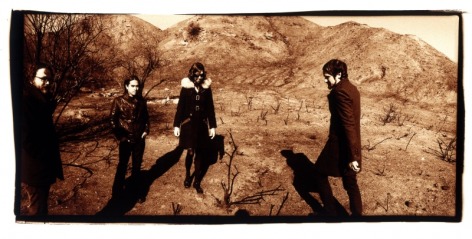
Silversun Pickups are on fire.
The L.A.-based indie rock band is enjoying headliner status after “paying dues” touring in the opening slot forthe likes of Muse and Foo Fighters (not exactly heinous dues-paying). The band’s summer tour is a big venue, big step up the group. They have been touring the US since June with opening acts Against Me! and The Henry Clay People.
“The tour has been a lot of fun and really hot,” says keyboardist Joe Lester. “It was really warm in Jersey today. It was like a jillion fuckin’ degrees in D.C. yesterday. It’s a good thing the bands we’ve played with have been really fun and really cool.”
In addition to adjusting to the lead-melting heat Lester and the band have also been adjusting to a new sort of venue.
“The venues have been a trip,” he says. “We’re more used to festivals, but these big venues are good since they allow us more production than past performances, as well as more control over the aesthetics.”
The bigger venues and more high-tech shows are appropriate for the growing band. However, the group is staying true to their small-time origins.
“I always prefer to see bands in smaller venues; I’m personally not a fan of arenas,” states Lester. “It’s also more fun to play in smaller venues because we get to interact more with the audience and the crowd is usually livelier. The places we’ve played at on our tour are the exact size we need; bands should play in places that are a good enough size for playing proper shows while making sure their crowds are not out in the dark.”
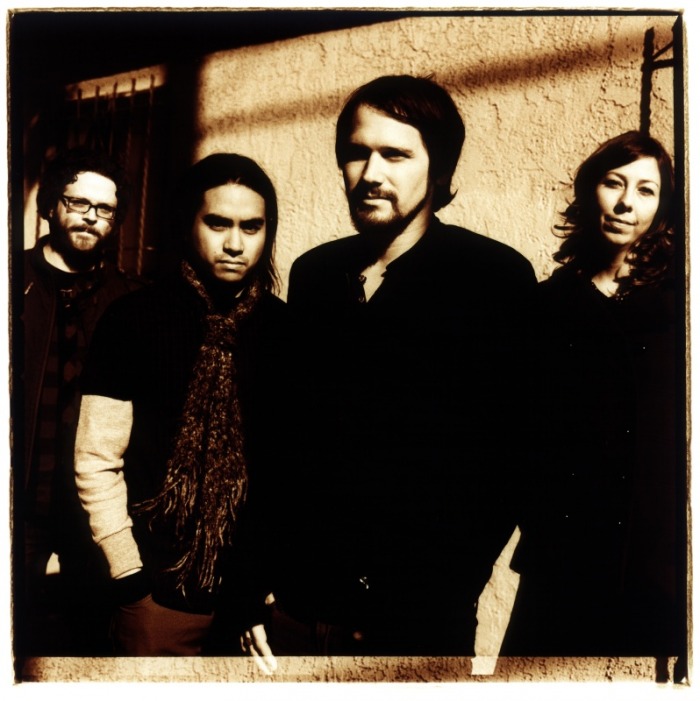
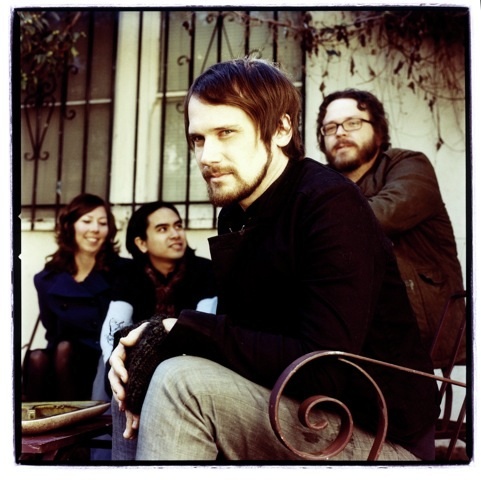
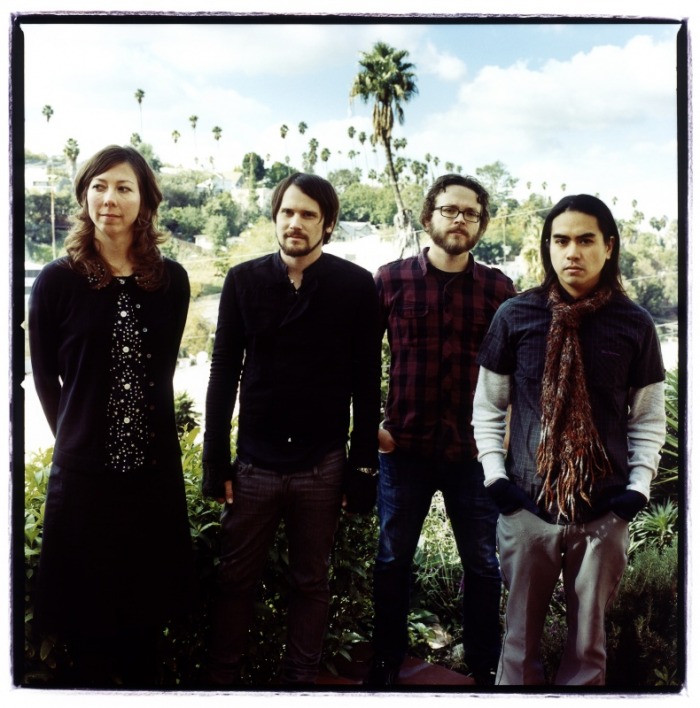
Formed in 2002 in Silver Lake, Silversun Pickups is fronted by Brian Aubert, the bands lead singer, guitarist, and primary lyricist. Aubert is known for his distinct “nasally” voice, which has a desperately frantic, fragile presence. Aubert’s voice is countered by the soft backing vocals of bassist Nikki Monninger. The group is completed by drummer Christopher Guanlao and Lester, who help create the urgent but delicate soundscapes that made the band famous.
The summer tour is just one sign of the group’s recent launch to stardom. They were also nominated for Best New Artist at the 52nd annual Grammy awards earlier this year. They were nominated alongside acts such as MGMT, Keri Hilson, The Ting Tings, and winners the Zac Brown Band.
“Wow, yeah the Grammys was a total mind-fuck,” Lester exclaims. “That wasn’t even on our radar, we were like ‘what the fuck are we doing here!’”
The L.A.-based indie rock band is enjoying headliner status after “paying dues” touring in the opening slot forthe likes of Muse and Foo Fighters (not exactly heinous dues-paying). The band’s summer tour is a big venue, big step up the group. They have been touring the US since June with opening acts Against Me! and The Henry Clay People.
“The tour has been a lot of fun and really hot,” says keyboardist Joe Lester. “It was really warm in Jersey today. It was like a jillion fuckin’ degrees in D.C. yesterday. It’s a good thing the bands we’ve played with have been really fun and really cool.”
In addition to adjusting to the lead-melting heat Lester and the band have also been adjusting to a new sort of venue.
“The venues have been a trip,” he says. “We’re more used to festivals, but these big venues are good since they allow us more production than past performances, as well as more control over the aesthetics.”
The bigger venues and more high-tech shows are appropriate for the growing band. However, the group is staying true to their small-time origins.
“I always prefer to see bands in smaller venues; I’m personally not a fan of arenas,” states Lester. “It’s also more fun to play in smaller venues because we get to interact more with the audience and the crowd is usually livelier. The places we’ve played at on our tour are the exact size we need; bands should play in places that are a good enough size for playing proper shows while making sure their crowds are not out in the dark.”
Formed in 2002 in Silver Lake, Silversun Pickups is fronted by Brian Aubert, the bands lead singer, guitarist, and primary lyricist. Aubert is known for his distinct “nasally” voice, which has a desperately frantic, fragile presence. Aubert’s voice is countered by the soft backing vocals of bassist Nikki Monninger. The group is completed by drummer Christopher Guanlao and Lester, who help create the urgent but delicate soundscapes that made the band famous.
The summer tour is just one sign of the group’s recent launch to stardom. They were also nominated for Best New Artist at the 52nd annual Grammy awards earlier this year. They were nominated alongside acts such as MGMT, Keri Hilson, The Ting Tings, and winners the Zac Brown Band.
“Wow, yeah the Grammys was a total mind-fuck,” Lester exclaims. “That wasn’t even on our radar, we were like ‘what the fuck are we doing here!’”
How did the band wind up where they are today? What was it that separated them from the great, unwashed mass of bands out there searching for a big break? What wisdom does Lester have for that great unwashed mass? If anything, he suggests they not emulate Silversun Pickups.
“If someone was writing a book on how to make a living being a band, (laughing) they should never use our example. God, it was terrible to do what we did,” says Lester. “We had no merchandise and we did no promotion; we just didn’t think that way. We would just play at any show and any opportunity given to us.”
Reconsidering, Lester decides that the band’s methodology may have actually been “the best way to get your name out,” yet not the best way to fund your band.
“We had no fuckin’ idea what we were doing business-wise. When we were first starting out, we were trying to figure out who we are, what we’re doing, and what it is we like,” he says. “We didn’t even think about putting out records until we did this show at Club Spaceland in LA. It was this local club in our neighborhood of Silver Lake, and we listened to these bootleg copies of our show. It was then that we decided we should record something because these tapes sounded terrible. This led to our first recording, which was for our own benefit so we could see how the recording process works. Eventually, our friend expressed interest in signing us to his label and we were convinced.”
A major factor to the group’s success was the internet, which, unsurprisingly, has been a big part of the band’s upward trajectory according to Lester.
“It’s really useful. We used MySpace, rest in peace (laughs), but it’s so much easier for small bands today; the internet is incredibly powerful,” says Lester. “You don’t need major labels anymore; bands get discovered all the time. The best part is that you don’t need to do anything special to harness the power of internet!”
Lester says that another important role in the band’s success was living in their Silver Lake neighborhood, which “worked on a practical level” when the band was first starting out.
“The neighborhood has since changed. Originally, living there was cheap, so practice space came cheap. We didn’t have to constantly make money to get by, and this definitely affected our ability to become a band, a community,” says Lester. “In Silver Lake, there are two great venues that take chances on new bands. This is essential to any band’s progression, playing live and focusing on what you want to do. We were lucky to be where we were; San Francisco is crazy according to our friends who play out there.”
“If someone was writing a book on how to make a living being a band, (laughing) they should never use our example. God, it was terrible to do what we did,” says Lester. “We had no merchandise and we did no promotion; we just didn’t think that way. We would just play at any show and any opportunity given to us.”
Reconsidering, Lester decides that the band’s methodology may have actually been “the best way to get your name out,” yet not the best way to fund your band.
“We had no fuckin’ idea what we were doing business-wise. When we were first starting out, we were trying to figure out who we are, what we’re doing, and what it is we like,” he says. “We didn’t even think about putting out records until we did this show at Club Spaceland in LA. It was this local club in our neighborhood of Silver Lake, and we listened to these bootleg copies of our show. It was then that we decided we should record something because these tapes sounded terrible. This led to our first recording, which was for our own benefit so we could see how the recording process works. Eventually, our friend expressed interest in signing us to his label and we were convinced.”
A major factor to the group’s success was the internet, which, unsurprisingly, has been a big part of the band’s upward trajectory according to Lester.
“It’s really useful. We used MySpace, rest in peace (laughs), but it’s so much easier for small bands today; the internet is incredibly powerful,” says Lester. “You don’t need major labels anymore; bands get discovered all the time. The best part is that you don’t need to do anything special to harness the power of internet!”
Lester says that another important role in the band’s success was living in their Silver Lake neighborhood, which “worked on a practical level” when the band was first starting out.
“The neighborhood has since changed. Originally, living there was cheap, so practice space came cheap. We didn’t have to constantly make money to get by, and this definitely affected our ability to become a band, a community,” says Lester. “In Silver Lake, there are two great venues that take chances on new bands. This is essential to any band’s progression, playing live and focusing on what you want to do. We were lucky to be where we were; San Francisco is crazy according to our friends who play out there.”
Silversun Pickups follow a distinctive process when creating music and have experimented with their sound from album to album.
“On our debut EP, Pikul, we included songs from our first demo session plus two new songs, which we remixed to make the tracks sound like they made sense together,” explains Lester.
Two years later, the group released their first full length album, 2007’s Carnavas, which gained Silversun Pickups a following outside LA.
“We actually wrote half of the songs just for that record, and this was the first instance we spent time creating the songs in a studio. We took all the songs and recreated them so that we could come up with overarching mood for the whole album,” says Lester. “We took out the acoustic elements found in Pikul to make our new album colder in feeling. We found ourselves just taking songs and mucking with them until we liked them. The original version of [the band’s breakout single], Lazy Eye, was actually 13 min long, and it was much slower.”
Swoon was the first release by the group where all the tracks were original and written to fit an overarching theme.
“We started making Swoon immediately after a two-and-a-half year tour. We started from scratch,” says Lester. “This was a new thing for us, to shape our album while writing it. The first four songs on the album were written in the order they appear in, and then we came up with 17 or 18 possible songs to include. We whittled down the songs based and if they made sense in context with the album. Songs can be a fucking nightmare to make, but for Swoon it was all written at same time, so this is our most cohesive album.”
Though Aubert is the primary lyricist, the group writes their music together. And the music is written first.
“Brian…writes all the lyrics usually right before we’re ready to record. We write the music first in the sense that there was a lot of strife with our relationships due to the two-and-a-half year tour,” he says.” On tour you live in this bubble, and so our estrangement from our relationships made life stressful. So [Swoon] for us was cathartic; it sorted out tenseness we were all feeling. The angrier and sadder moments on the album definitely reflect the lives of everyone in the band at that time.”
Lester then shares an interesting fact about the hit single, Panic Switch. It almost never was.
“[It] was the last song created. Brian actually came up with it after we decided to stop, after we decided we had enough material. But it came together real fast, this song.”
This afterthought, which was almost left off the album, would become the group’s first number one song on Billboard's Hot Modern Rock Songs chart, as well as the first song by an independent artist to reach this spot in 11 years.
The keyboardist adds that their hometown aids them with musical inspiration as well. Los Angeles serves as a huge presence in the music and process of the Silversun Pickups; it is where all their music has been written and recorded.
“I’d guess that if we lived somewhere else it would unconsciously change our mindset,” says Lester. “The area also had a lot of other bands and creative people, and it helps to be surrounded by such an environment.”
As for his own writing technique, Lester is something of a homebody.
“…personally like to be at home. We just don’t write on road. I’m jealous of those who do that, those who are able to write road songs,” he says. “Being able to do that would be good since the best music is always written on the road. It’s ironic that we as a group find inspiration in the mundane; home life is where we are most creative.”
When asked if there were any downsides to working in their field, Lester is unequivocal.
“No not really. I mean, we make our living making music, so we’re really lucky. It’d be wrong to complain and sound like douchebag. Sure, we’re away from home a lot, but a lot of other jobs are like that,” says Lester. “You get better at maintaining your relationships long-distanced the more you [go on tour]. We make music for a living, there’s nothing to complain about.”
Lester then says that the group doesn’t even let the steel-faced, sometimes harsh comments from critics infringe on the creative process.
“Reviews are reviews; that’s just a part of it all. We don’t really read them, but we know people always make comparisons,” he states. “It’s understandable; they have to give a frame of reference to the reader. The comparisons are funny; it’s interesting to hear what people hear in our records.”
“On our debut EP, Pikul, we included songs from our first demo session plus two new songs, which we remixed to make the tracks sound like they made sense together,” explains Lester.
Two years later, the group released their first full length album, 2007’s Carnavas, which gained Silversun Pickups a following outside LA.
“We actually wrote half of the songs just for that record, and this was the first instance we spent time creating the songs in a studio. We took all the songs and recreated them so that we could come up with overarching mood for the whole album,” says Lester. “We took out the acoustic elements found in Pikul to make our new album colder in feeling. We found ourselves just taking songs and mucking with them until we liked them. The original version of [the band’s breakout single], Lazy Eye, was actually 13 min long, and it was much slower.”
Swoon was the first release by the group where all the tracks were original and written to fit an overarching theme.
“We started making Swoon immediately after a two-and-a-half year tour. We started from scratch,” says Lester. “This was a new thing for us, to shape our album while writing it. The first four songs on the album were written in the order they appear in, and then we came up with 17 or 18 possible songs to include. We whittled down the songs based and if they made sense in context with the album. Songs can be a fucking nightmare to make, but for Swoon it was all written at same time, so this is our most cohesive album.”
Though Aubert is the primary lyricist, the group writes their music together. And the music is written first.
“Brian…writes all the lyrics usually right before we’re ready to record. We write the music first in the sense that there was a lot of strife with our relationships due to the two-and-a-half year tour,” he says.” On tour you live in this bubble, and so our estrangement from our relationships made life stressful. So [Swoon] for us was cathartic; it sorted out tenseness we were all feeling. The angrier and sadder moments on the album definitely reflect the lives of everyone in the band at that time.”
Lester then shares an interesting fact about the hit single, Panic Switch. It almost never was.
“[It] was the last song created. Brian actually came up with it after we decided to stop, after we decided we had enough material. But it came together real fast, this song.”
This afterthought, which was almost left off the album, would become the group’s first number one song on Billboard's Hot Modern Rock Songs chart, as well as the first song by an independent artist to reach this spot in 11 years.
The keyboardist adds that their hometown aids them with musical inspiration as well. Los Angeles serves as a huge presence in the music and process of the Silversun Pickups; it is where all their music has been written and recorded.
“I’d guess that if we lived somewhere else it would unconsciously change our mindset,” says Lester. “The area also had a lot of other bands and creative people, and it helps to be surrounded by such an environment.”
As for his own writing technique, Lester is something of a homebody.
“…personally like to be at home. We just don’t write on road. I’m jealous of those who do that, those who are able to write road songs,” he says. “Being able to do that would be good since the best music is always written on the road. It’s ironic that we as a group find inspiration in the mundane; home life is where we are most creative.”
When asked if there were any downsides to working in their field, Lester is unequivocal.
“No not really. I mean, we make our living making music, so we’re really lucky. It’d be wrong to complain and sound like douchebag. Sure, we’re away from home a lot, but a lot of other jobs are like that,” says Lester. “You get better at maintaining your relationships long-distanced the more you [go on tour]. We make music for a living, there’s nothing to complain about.”
Lester then says that the group doesn’t even let the steel-faced, sometimes harsh comments from critics infringe on the creative process.
“Reviews are reviews; that’s just a part of it all. We don’t really read them, but we know people always make comparisons,” he states. “It’s understandable; they have to give a frame of reference to the reader. The comparisons are funny; it’s interesting to hear what people hear in our records.”

Silversun Pickups' sound has frequently been comparted to various indie-rockers of the 1990s.
“We get compared to Smashing Pumpkins a lot, which is fine by me. Their first two records are amazing, and those are the ones people always compare us to. Fuck, we were just surprised to be compared to real band!” he says. “As for weird comparisons, I’m sure there has been a couple. There was one made during the original incarnation of the band, which consisted of Brian and Nikki and their significant others. This group was referred to as ‘the Fleetwood Mac of alt rock’ (laughs). It’s always interesting to hear what others hear in our music, so if someone hears, say, Public Enemy, then so be it.”
Lester gives a word of warning to bands aspiring to be critical darlings—“You can’t try to write music for reviewers; life would be stressful all the time.”
The band also embrases more than just the comparisons to the music of past decades. They even year for the days of analog.
“Oh yeah, I feel everyone in Silversun Pickups would say their favorite way of listening to music is with vinyl. It just sounds so much better, and it’s really making a comeback. I personally think digitization creates this longing for older formats of music,” he continues. “I’m this way with keyboards; I really miss those old analog keyboards. One thing about vinyl is that the artwork of an LP is so much more appealing, you feel like the record has an actual presence instead of staring at a meaningless screen of ones and zeroes. Vinyl is glorious; I’m a total sucker for records.”
Does Lester ever listen to the band's music? “I don't listen to radio much, so, no (laughs). I only ever listen to our songs after we finish rehearsing, just to figure out how we can orchestrate a live performance of a track. Live adaptations definitely require planning unless you have backing tracks, which is totally lame.” he says.
Silversun Pickups are on tour now, as they have been for ages You can find out tour dates and more at the band website.
“We get compared to Smashing Pumpkins a lot, which is fine by me. Their first two records are amazing, and those are the ones people always compare us to. Fuck, we were just surprised to be compared to real band!” he says. “As for weird comparisons, I’m sure there has been a couple. There was one made during the original incarnation of the band, which consisted of Brian and Nikki and their significant others. This group was referred to as ‘the Fleetwood Mac of alt rock’ (laughs). It’s always interesting to hear what others hear in our music, so if someone hears, say, Public Enemy, then so be it.”
Lester gives a word of warning to bands aspiring to be critical darlings—“You can’t try to write music for reviewers; life would be stressful all the time.”
The band also embrases more than just the comparisons to the music of past decades. They even year for the days of analog.
“Oh yeah, I feel everyone in Silversun Pickups would say their favorite way of listening to music is with vinyl. It just sounds so much better, and it’s really making a comeback. I personally think digitization creates this longing for older formats of music,” he continues. “I’m this way with keyboards; I really miss those old analog keyboards. One thing about vinyl is that the artwork of an LP is so much more appealing, you feel like the record has an actual presence instead of staring at a meaningless screen of ones and zeroes. Vinyl is glorious; I’m a total sucker for records.”
Does Lester ever listen to the band's music? “I don't listen to radio much, so, no (laughs). I only ever listen to our songs after we finish rehearsing, just to figure out how we can orchestrate a live performance of a track. Live adaptations definitely require planning unless you have backing tracks, which is totally lame.” he says.
Silversun Pickups are on tour now, as they have been for ages You can find out tour dates and more at the band website.






 RSS Feed